Judul : Autonomous Cars to Flood Roads by 2028
link : Autonomous Cars to Flood Roads by 2028
Autonomous Cars to Flood Roads by 2028
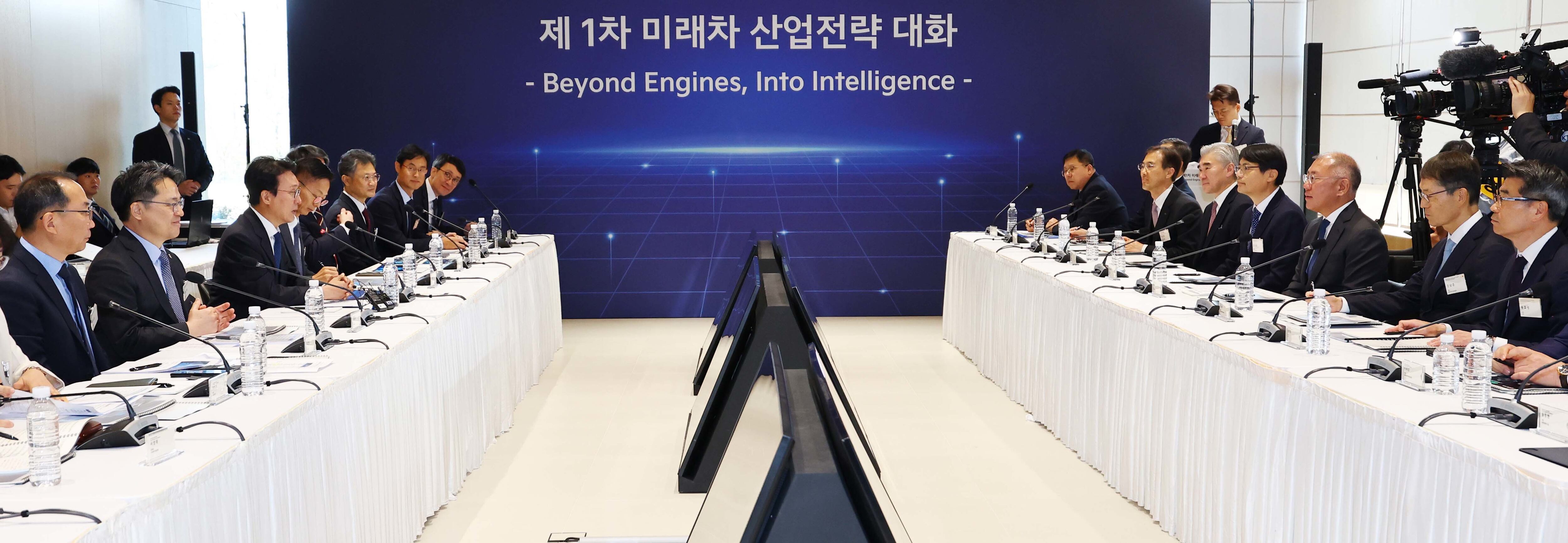
The government has revealed plans to offer 15 trillion South Korean won in policy funding to the local automobile sector next year, aiming to address the U.S. 15% tariffs on vehicles and components manufactured in South Korea. The financial support for electric vehicle (EV) purchasers will rise by 30.9%, increasing from 715 billion won this year to 936 billion won in the following year. Additionally, the government intends to begin large-scale production of self-driving vehicles from 2028 and to create autonomous driving systems utilizing artificial intelligence (AI) through an "end-to-end" (E2E) method.
The Government Policy Coordination Office mentioned that Prime Minister Kim Min-seok chaired the "1st Future Vehicle Industry Strategy Dialogue" at Kia Autoland Hwaseong in Hwaseong City, Gyeonggi Province, and introduced the "K-Mobility Global Leadership Strategy."
The government stated, “Even if U.S. tariffs on vehicles and components are lowered to 15%, they will still create a challenge for exporters, since there were no such tariffs last year.” As a result, the government plans to keep or increase its policy financing support—previously raised from 13 trillion won to 15 trillion won this year—at the same level or more next year. It will also maintain a 60% discount on trade insurance and guarantee fees for small and medium-sized auto parts firms. Furthermore, the government will work on negotiations for a Korea-Mexico Free Trade Agreement (FTA) and approve the Korea-Malaysia FTA to broaden export opportunities for the domestic automobile sector.
To avoid the decline of the domestic automobile sector caused by local factory investments amid increasing protectionism, the government will introduce the "K-Mother Factory" policy, with the goal of keeping annual domestic vehicle production above 4 million units. This approach focuses on transforming the industry towards future vehicles such as autonomous and electric cars to ensure competitiveness and manufacturing capabilities. A 500 billion won Future Vehicle Industry Technology Innovation Fund and a 150 trillion won National Growth Fund will be used to encourage domestic investments in next-generation vehicles.
Beginning next year, individuals replacing internal combustion engine vehicles with electric vehicles will be eligible for an extra 1 million won in “EV Transition Support Grant” in addition to current subsidies. The government plans to transform 70% of internal combustion engine component manufacturers into firms producing parts for future vehicles by 2030, identifying 200 companies as “Future Vehicle Specialized Enterprises” and offering targeted financial and research support. Additionally, it will work with businesses and academic institutions to train 70,000 professionals in AI and autonomous driving technologies.
To establish E2E-AI autonomous driving technology—a cutting-edge advancement—the government plans to fund extensive R&D efforts by 2030. A standardized platform for software-defined vehicles (SDVs) will be created, led by LG Electronics and Hyundai Mobis. The domestic production rate of automotive semiconductors is expected to increase from 5% to 10% by 2030. Regulatory enhancements for the mass production of autonomous vehicles in 2028 will be completed this year.
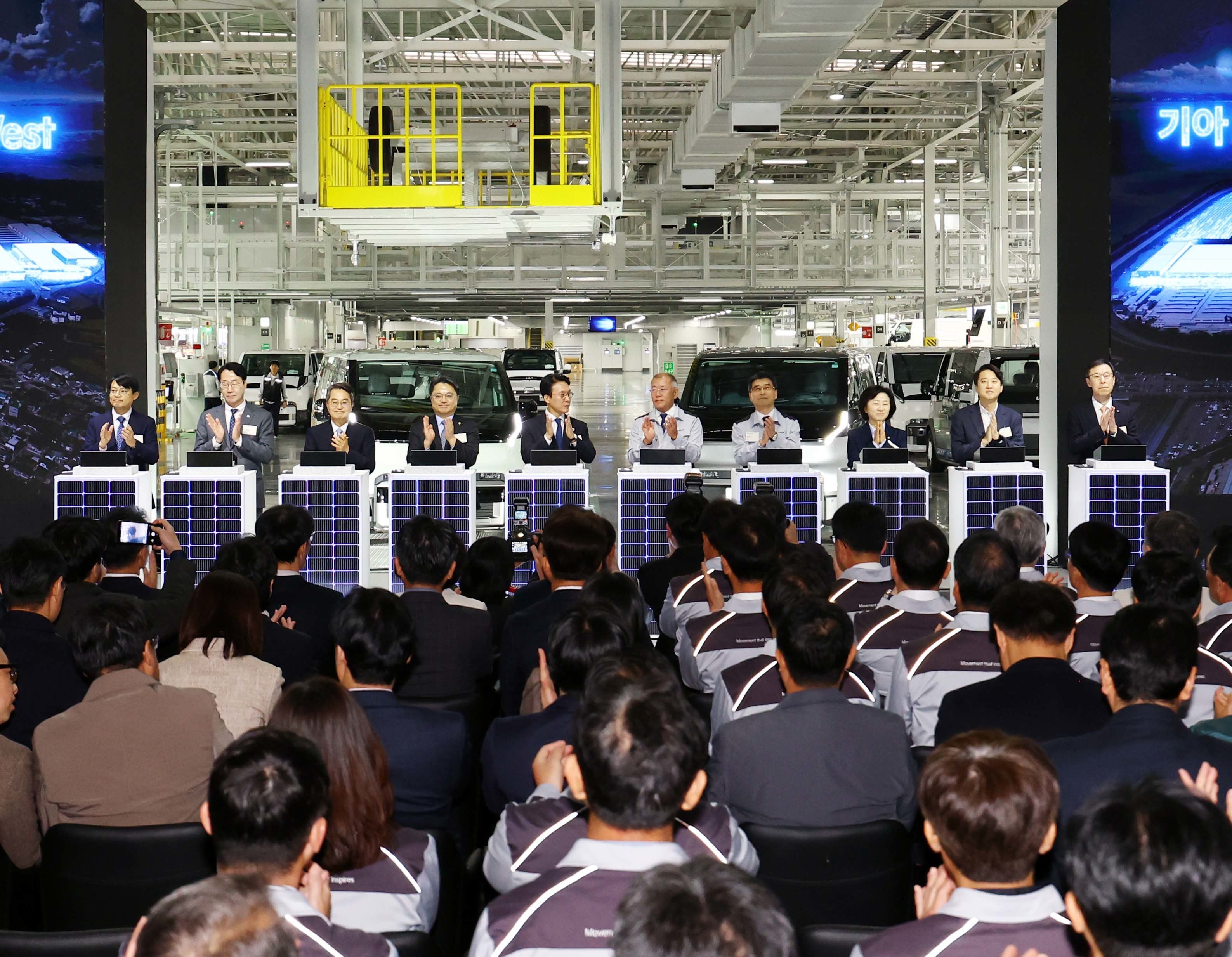
Prior to the industry strategy discussion, Prime Minister Kim participated in the completion ceremony of Kia's East Plant and the foundation-laying event for its West Plant, which is focused on electric vehicle manufacturing. He remarked, "The automotive industry serves as the core and vital component of our manufacturing sector. As we step into the era of future mobility—integrating electric vehicles, self-driving technology, and artificial intelligence—we need to be ready for emerging challenges."
Stressing the importance of guiding the AI mobility era, Kim revealed the establishment of the "AI Future Vehicle Alliance" and a national R&D investment of 1.2 trillion won over the next five years. He further stated, "To secure a steady supply of vehicle semiconductors, a crucial component of AI future vehicles, we will focus on developing domestic AI semiconductors and extend autonomous driving test areas to urban and residential zones."
Kim emphasized the need to build a foundation for the Korean-style "Mother Factory," saying, "We will establish a setting where advanced automotive innovation and manufacturing hubs in Korea keep developing, encouraging investments, production, and exports." He also talked about reworking incentive structures to incorporate R&D, investment, and production related to environmentally friendly vehicles and key components. "By 2035, I anticipate that eight out of every ten vehicles produced domestically will be eco-friendly," he added.
Emphasizing the importance of a growth environment for component manufacturers and employees, Kim stated, “The government will fully back workspaces where AI and the skills of technicians work together. We will offer maximum assistance—financial, human resources, technology, and advisory—to help component companies effectively shift towards electrification.”
Demikianlah Artikel Autonomous Cars to Flood Roads by 2028
Anda sekarang membaca artikel Autonomous Cars to Flood Roads by 2028 dengan alamat link https://www.arablionz.pro/2025/11/autonomous-cars-to-flood-roads-by-2028.html
0 Response to "Autonomous Cars to Flood Roads by 2028"
Posting Komentar