Judul : Sindh Cabinet Approves $15M Grant for JPMC Tower and 14 ANF Courts
link : Sindh Cabinet Approves $15M Grant for JPMC Tower and 14 ANF Courts
Sindh Cabinet Approves $15M Grant for JPMC Tower and 14 ANF Courts
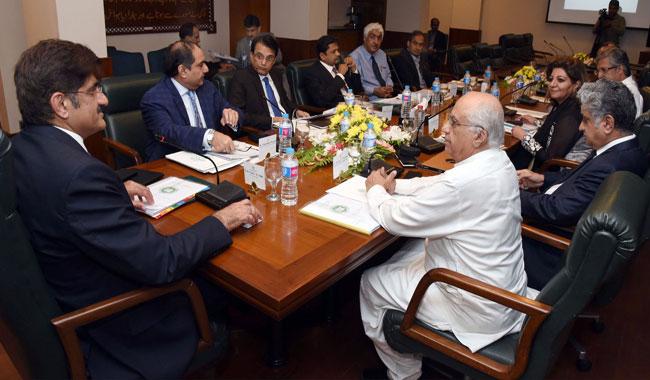
The Sindh Cabinet approved a $15 million grant for the construction of a new JPMC Emergency Tower, the formation of a community health company, the development of a Sindh Government cloud, the establishment of 14 Anti-Narcotics Force courts, and a Center for Excellence aimed at combating violent extremism. These decisions were made during a meeting held at the CM House, chaired by Chief Minister Syed Murad Ali Shah. The cabinet also implemented cost-cutting measures, permitted the acquisition of a heritage building for the IT Tower, and extended the validity of the screening test until June 2028.
The gathering, which took place at CM House, included provincial ministers, advisors, special assistants, Chief Secretary Asif Hyder Shah, and relevant secretaries along with other officials. The cabinet reviewed 57 items on the agenda — one of the most extensive lists addressed in a single session. Initially, the Chief Minister offered a prayer for former chief minister Aftab Shaban Mirani and former provincial minister Lal Bux Bhutto, seeking their eternal peace.
The head of the government also stated that cabinet sessions will now take place biweekly, with the upcoming meeting set for December 2 (Tuesday).
The Cabinet, following discussions, approved a grant of $15 million (or the equivalent in PKR) to the Patients' Aid Foundation (PAF). This funding was requested to cover the costs of utilities and the purchase of equipment for a newly planned 12-floor Emergency Tower at Jinnah Post Graduate Medical Centre (JPMC) in Karachi. The total projected cost of the Emergency Tower is $35 million. A group of PAF-JPMC donors has already pledged $20 million for the construction part. The remaining $15 million is being sought from the Sindh Government for equipment and utilities. The proposed $15 million grant is scheduled to be disbursed in two equal installments of $7.5 million each, during the Financial Years 2026-27 and 2027-28. The chief minister stated that the new Emergency Tower will provide 722 beds and 17 operating theatres, which is a major increase compared to the current Emergency Department's 224 beds and three operating theatres.
The Patients' Aid Foundation, via a collaboration between public and private sectors, has already increased JPMC's capacity from 1,100 to 2,208 beds. The completion of two significant structures, the 12-floor Sardar Yasin Malik Medical Complex (SYMMC) and the 7-floor Officers' Ward (Rabia Rashid Soorty Building - RRSB), is anticipated to boost JPMC's capacity to 2,584 beds by the end of 2026. The cabinet has given its approval for the formation of the People's Community Health Services Company, a non-profit organisation under Section 42 of the Companies Act, 2017, with the goal of revitalising and expanding healthcare at the community level throughout the province. This initiative will modernise and complement the aging Lady Health Workers (LHW) programme, which was introduced by Shaheed Mohtarma Benazir Bhutto and currently serves only 41 per cent of Sindh's population. With over 9,600 LHWs and supervisors expected to retire by 2035, the new company will recruit and train a new group of Community Health Workers who will be equipped with digital tools, transportation, and real-time reporting systems to reach the remaining 59 per cent of communities that are not yet covered. The company will be managed by a nine-member Board led by the Health Secretary, featuring representation from various sectors and independent experts. A seed funding of Rs 200 million for the fiscal year 2025-26 has been approved to support initial setup, training, logistics, and transport.
The Cabinet also approved the Memorandum and Articles of Association mandated by SECP.
The government's cabinet gave approval for the budget restructuring of the Sindh Government Children Hospital North Karachi (SGCHNK), which functions under a Public-Private Partnership (PPP) arrangement with the Poverty Eradication Initiative (PEI).
The SGCHNK is a hospital that has 225 beds and operates under a Service and Management Agreement that lasts for 10 years, starting on September 30, 2016, and ending on September 29, 2026.
The Health Department, in collaboration with PEI, adjusted the budget for the final (10th) year of the contract to Rs. 833.77 million, comprising Rs. 738.65 million for operational costs and Rs. 95.12 million for capital expenditure (CapEx).
The cabinet gave its approval for the creation of a Government-owned Secure Private Cloud, part of the CLICK Project supported by the World Bank, intended to house the S-BOSS e-Licensing Portal and upcoming government applications.
The cloud, overseen by the Sindh Science and IT Department, will offer a flexible, safe, and unified IT system, guaranteeing data control, uninterrupted operations for 55 million residents, and lasting financial benefits for the provincial administration.
The Cabinet gave its approval to the Home Department's suggestion to reclassify 14 Anti-Terrorism Courts (ATCs) as 'Special Courts' in accordance with the Sindh Control of Narcotics Substance (CNS) Act, 2024.
At present, Sindh has 33 ATCs, including 20 in Karachi and 13 spread across other districts. Noting the low number of cases in some Karachi ATCs, the Home Department suggested closing down 13 ATCs in Karachi and one in Hyderabad, and transforming them into Special Courts to speed up the processing of drug-related cases.
The reclassification will set up Special Courts in Karachi, Hyderabad, Mirpurkhas, Shaheed Benazirabad, Sukkur, and Larkana divisions. The remaining ATCs in Sindh will be restructured to ensure effective management of pending cases.
The suggestion corresponds to Section 13 of the Anti-Terrorism (Sindh Amendment) Act, 2025, which permits the provincial government to expand, reduce, or eliminate courts when necessary.
The Sindh Cabinet gave its approval for the creation of the Sindh Center for Excellence in Combating Violent Extremism within the Home Department.
The action comes after the passage of the Sindh Centre for Excellence on Countering Violent Extremism Act, 2025, designed to stop violent extremism, terrorism, militancy, and subversive actions within the province.
The cabinet was also provided with a summary from the Science and Information Technology Department about the plan to acquire the Habib Insurance / HBL heritage building located on M.A. Jinnah Road for setting up the Sindh IT Tower.
The suggestion—intended to accommodate digital innovation labs, cloud data center infrastructure, shared workspaces, and the headquarters of the Sindh IT Company—was reviewed with instructions for thorough structural, financial, and heritage conservation evaluations prior to proceeding.
The cabinet gave its approval in principle to the proposal and instructed the IT department to perform required evaluations across various departments, including the Board of Revenue for cost assessment, N.E.D. University of Engineering and Technology to evaluate structural strength and condition, and the Culture department to assess or acquire the Heritage Building under the Sindh Cultural Heritage Act.
The cabinet also reviewed a suggestion from the Works and Services Department requesting the lifting of the hiring restriction that was enforced on 11 August 2023, in order to recruit crucial professional personnel for its PPP model, which is managing significant infrastructure initiatives such as the Hyderabad-Mirpurkhas Dual Carriageway, Jhirk-Mullah Katiyar Bridge, Karachi-Thatta Dual Carriageway, and ongoing projects like the Ghotki-Kandhkot Bridge and M9-N5 Link Road.
The cabinet reviewed the extension of the validity period for general screening test results conducted by Sukkur IBA Testing Services (STS) for recruitment to positions ranging from BS-5 to BS-15. It was mentioned that written exams for the Graduation Category took place in January 2023, and for the Intermediate Category in June 2023, with a three-year validity period previously approved by the cabinet. Nevertheless, due to a High Court injunction, the 2024 general elections, and the following recruitment freeze, appointments could not proceed.
To ensure test results remain valid beyond 2026 and to protect participants' qualifications, the cabinet examined the suggestion and granted an extension of the validity period until June 2028.
The Minister of Local Government, Syed Nasir Hussain Shah, submitted the findings of the Cabinet's Austerity Sub-Committee.
The government gave its approval for the creation of the Sindh Charity Commission as per the Sindh Charity Commission Act, 2019 — a law that regulates the registration, supervision, and management of all charitable groups, NGOs, and NPOs functioning within the province. The commission is required to promote transparency, responsibility, and effective use of charitable funds by enforcing registration, financial tracking, and annual reporting from charities.
The cabinet examined the structure of the Commission, which features the Minister for Social Welfare as its Chairperson; two MPAs selected by the Speaker; and Secretaries from the departments of Social Welfare, Finance, Health, Home, School Education, Women Development, and the Department of Empowerment of Persons with Disabilities as automatic members, in addition to five non-official members who will be announced by the government.
The cabinet gave approval for the reformation of the Board of Directors of the Karachi Fisheries Harbour Authority (KFHA). It was mentioned that the term of the previously announced Board ended in August 2025, necessitating its reformation according to the law.
The suggested Board comprises official members including the Minister of Livestock and Fisheries (Chairman), senior secretaries, directors of federal and provincial fisheries organizations, the Deputy Commissioner of Keamari, and delegates from the Maritime Security Agency. Non-official members are selected from the Fishermen Cooperative Society Ltd. (FCSL) and the Pakistan Fisheries Exporters Association.
The cabinet reviewed the 2025-26 sugarcane milling season. According to the Sugar Factories Control Act, 1950, milling in Sindh should start no later than November 30, and farmers have strongly urged for the timely start to avoid a decrease in sugar content and delays in preparing the land for future crops.
The cabinet also examined the distribution of 639 extra residential plots for members of the Karachi Press Club (KPC). It was mentioned that KPC had previously received 1,271 plots via the Lyari Development Authority (LDA) and then asked for an additional 700 plots, which were later confirmed to be 639 valid applicants.
The suggestion submitted to the cabinet contained LDA's application for permission to design, distribute, and cultivate the land across 125 acres within Hawksbay Scheme-42, along with endorsement for the disbursement of required financial resources.
The local government department notified the cabinet that the lists of 1,271 current allottees and 639 proposed beneficiaries had been submitted by LDA and included in the updated summary. The cabinet gave its approval to the proposal.
The cabinet reviewed the Local Government's suggestion regarding the allocation of residential plots to Karachi Press Club members within the New Malir Housing Scheme-I (Block-12) and Taiser Town Scheme-45 (Sectors 22 and 23), in accordance with the previously approved 80/20 cost-sharing arrangement.
It was mentioned that during the Governing Body meeting of the Malir Development Authority (MDA) on 16 October 2024, it was determined that the Government of Sindh would cover 80% of the land and development expenses, with KPC members responsible for the remaining 20%. The cabinet was updated that computerized lot drawing for these plots had taken place in 2014 and 2018, and that a committee led by the Secretary of the Information Department had approved the 80/20 policy.
The Sindh Cabinet gave its approval to the Civil Registration Management System (CRMS) Agreement, which was initially signed on January 16, 2020, between NADRA and the Local Government and Housing Town Planning Department (LG and HTPD).
The CRMS is a web-based platform that allows local councils (Municipal, Town, and Union Committees/Councils) to electronically record key life events including birth, marriage, divorce, and death.
Besides the original agreement, the Cabinet also gave its approval to an Addendum that introduces a CRMS Mobile Application. This mobile application will enable citizens to submit and record vital statistics at the current rates, without any additional financial burden on the Government.
The head of the government, with the cabinet's consent, has already eliminated the charge.
The Sindh Cabinet has given its approval to the Framework Agreement/Memorandum of Understanding aimed at setting up a Women's Technical and Vocational Education and Training (TEVT) Institute in Batkhela, located in Malakand District, Khyber Pakhtunkhwa.
The cabinet gave its approval to the Education City Land Allocation Rules and Education City Regulations. These rules and regulations are essential for implementing the objectives of the Education City Act 2013, which oversees the Education City Project.
The procedure for the Land Allocation Mechanism requires submitting a request for a permit to the Project Implementation Unit (PIU).
Individuals who have permits must pay a sum equal to 50 percent of the current market value for land allocated to educational institutions. If the land is utilized for any other purpose besides its intended use, the allocation can be revoked.
Provided by SyndiGate Media Inc. (Syndigate.info).Demikianlah Artikel Sindh Cabinet Approves $15M Grant for JPMC Tower and 14 ANF Courts
Anda sekarang membaca artikel Sindh Cabinet Approves $15M Grant for JPMC Tower and 14 ANF Courts dengan alamat link https://www.arablionz.pro/2025/11/sindh-cabinet-approves-15m-grant-for.html
0 Response to "Sindh Cabinet Approves $15M Grant for JPMC Tower and 14 ANF Courts"
Posting Komentar